A common misconception about childhood trauma is that because it occurs at a young age, children eventually forget about it. However, according to Psychology Today, children process traumatic experiences differently than adults because their brains, bodies, and nervous systems are still developing. Adults have the ability to use rational thought to process experiences, understand emotions, and develop coping strategies, whereas children often adapt simply to survive.
These adaptations can continue into adulthood, influencing attachment styles, trust, communication, emotional regulation, and feelings of safety within relationships. While these patterns may have once served a protective purpose, they can create long-term challenges long after the trauma has ended.
Trauma responses developed in childhood are learned survival mechanisms, not character flaws. If you recognize yourself in any of the patterns discussed in this post, know that healing and change are possible.
This article is for informational and educational purposes only and is not intended to replace professional mental health advice, diagnosis, or treatment. Childhood trauma affects everyone differently, and healing is not one-size-fits-all. If you are struggling with the effects of trauma, consider reaching out to a licensed mental health professional or trauma-informed therapist for support.
Key Takeaways
- Childhood trauma can influence trust, communication, emotional regulation, intimacy, and attachment styles well into adulthood
- Many unhealthy relationship patterns are survival responses developed to cope with childhood experiences
- Trauma can contribute to anxious, avoidant, or disorganized attachment styles, making relationships feel confusing or unsafe
- Building self-awareness is often the first step toward recognizing and changing unhealthy relationship patterns
- Healing is possible through self-compassion, healthy relationships, education, and professional support
In This post, You’ll Learn:
- What childhood trauma is and why it affects relationships
- How childhood trauma affects attachment styles in relationships
- Common relationship struggles linked to childhood trauma
- Signs that childhood trauma may be impacting your relationship
- How to heal relationship patterns caused by childhood trauma
- Can relationships improve after childhood trauma
What Is Childhood Trauma and Why It Affects Relationships
Childhood trauma is any experience that overwhelms a child’s ability to cope. It can include physical abuse, sexual abuse, neglect, bullying, witnessing domestic violence, parental substance abuse, discrimination, or the loss of a loved one.
Childhood experiences help shape beliefs about safety, love, trust, and boundaries. Because children often normalize the environments they grow up in, unhealthy patterns can feel familiar long into adulthood. Trauma can keep the nervous system in survival mode, influencing attachment styles, communication, emotional regulation, and relationship behaviours years after the trauma has ended.
If you’re wondering whether childhood experiences are still affecting you today, my post on Signs of Childhood Trauma in Adults explores common emotional and behavioural patterns in greater detail.
How Childhood Trauma Affects Attachment Styles in Relationships

What Are Attachment Styles?
Attachment styles are patterns of relating to others that develop during childhood and can influence relationships in adulthood. Childhood experiences often set the expectations you carry on into adulthood surrounding trust, intimacy, communication, and emotional safety.
There are four main attachment styles:
- Secure – Generally comfortable with trust, intimacy, communication, and boundaries.
- Anxious – Often fears rejection or abandonment and may seek frequent reassurance from others.
- Avoidant – Tends to value independence, avoid vulnerability, and struggle with emotional closeness.
- Disorganized – Experiences both a desire for connection and a fear of it, often creating a push-pull dynamic in relationships.
Impact on Relationships
Childhood trauma can influence attachment styles by teaching children that relationships are unsafe or unpredictable. While not everyone who experiences trauma develops an insecure attachment style, repeated experiences of abuse, neglect, invalidation, or inconsistency can increase the likelihood of developing anxious, avoidant, or disorganized attachment styles.
Personal Reflection
One of the most confusing things about looking back on my childhood is that I genuinely had loving parents. They showed affection and support, constantly put our needs before their own, worked tirelessly for our family, and did everything they could with the information they had at the time.
At the same time, my experiences taught my nervous system that safety and unpredictability could exist together. Because my parents worked long hours and I was often cared for by other family members, I learned that the people I depended on most were not always physically available. I didn’t consciously think, “I am unsafe.” Instead, my body learned that being vigilant, careful, and attentive to others helped me avoid discomfort or conflict.
Looking back, these experiences contributed to a disorganized attachment style. I became highly aware of other people’s moods and constantly worried about making mistakes. I learned to expect unpredictability in relationships, which later showed up as fear of abandonment, difficulty trusting others, and a strong need for reassurance.
Understanding this has helped me realize that attachment wounds are not always created by a lack of love. Sometimes they develop from the ways a child’s nervous system adapts to their environment.
None of this changes how much love my parents gave me. If anything, it highlights how childhood experiences can shape us in ways that are far more complex than whether we were loved or unloved. I felt loved, but I also felt afraid at times. Both experiences existed at the same time, and both influenced how I learned to navigate relationships.
Common Relationship Struggles Linked to Childhood Trauma

Trust and Emotional Safety
Childhood trauma can create confusion around trust and emotional safety as children learn that the same people that were supposed to protect them hurt them. As adults, survivors may struggle to fully trust their partners, expect rejection, or fear abandonment during moments of conflict.
Communication and Conflict
Childhood trauma can make it difficult to express emotions or communicate needs. Some survivors avoid conflict entirely, while others become emotionally reactive when disagreements arise.
Boundaries and People-Pleasing
Many survivors learn to prioritize other people’s needs over their own to avoid conflict, rejection or punishment. Children naturally seek approval, love, and acceptance from their caregivers, and trauma can teach them that keeping others happy is the safest option. As adults, this can show up as people-pleasing, difficulty saying no, and struggles with setting healthy boundaries.
Intimacy and Attachment
Childhood trauma can affect both emotional and physical intimacy. Survivors may crave closeness while simultaneously feeling overwhelmed by vulnerability, creating confusion within relationships.
Nervous System Responses
Trauma can keep the nervous system on high alert. As adults, this may appear as hypervigilance, overanalyzing behaviour, or experiencing intense emotional reactions to relatively minor situations.
Personal Reflection
When I first began noticing my unhealthy relationship patterns, I thought I had personal character flaws. Through therapy and self-reflection, I realized many of my behaviours were connected to childhood trauma.
I often became emotionally reactive to minor disagreements, overanalyzed small changes in my husband’s tone or behaviour, and struggled to trust consistency in our relationship. I craved closeness and reassurance, yet sometimes felt overwhelmed by it, often pushing him away to see how he’d respond. I realized I was often reacting not only to the present moment, but also to emotions connected to past experiences.
Understanding where these patterns came from helped me stop viewing them as personal failures and start viewing them as survival responses that could be changed.
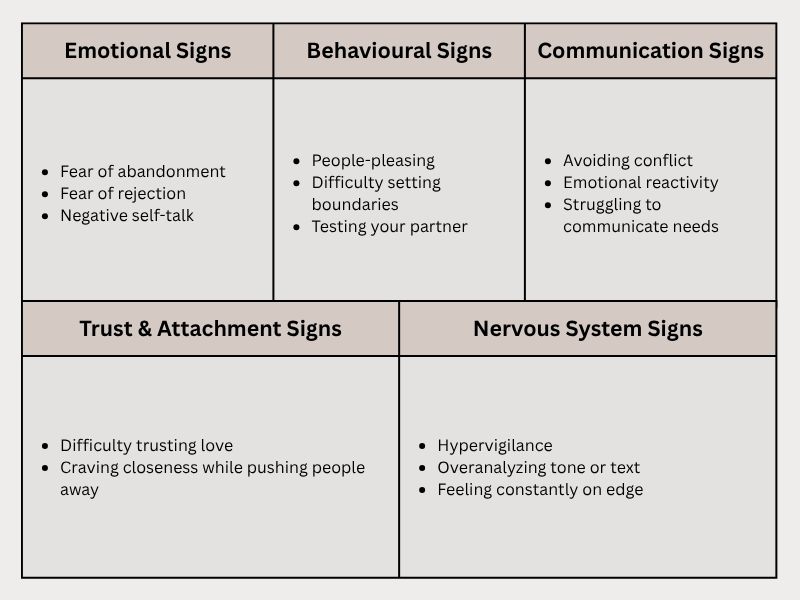
Signs Childhood Trauma May Be Affecting Your Relationships
It’s common for trauma survivors to subconsciously carry protective patterns into their adult relationships without realizing it. Because these patterns often develop as survival mechanisms during childhood, they can feel automatic, making it difficult to connect past experiences to present-day behaviours. What once helped create safety may no longer serve you in adulthood.
Healing also brought grief over the relationships that had been shaped by my trauma, including my relationship with my parents. I reflect on those experiences in The Grief No One Warned Me About During Healing.
How to Heal Relationships Patterns Caused by Childhood Trauma
Recognizing patterns caused by childhood trauma can be difficult, but healing is possible. If you’re looking for practical next steps, I explore this further in How to Start Healing From Childhood Trauma. Healing always begins with self-awareness, self-compassion, and time.
- Build self-awareness by identifying triggers or patterns as they occur
- Practice self-compassion by thinking of yourself as a child when negative thoughts arise and responding with kindness rather than criticism
- When you are ready, share your triggers with your partner so they can understand your needs
- Learn emotional regulation by understanding when fear is driven by past trauma and not present facts
- Practice setting boundaries by identifying what feels unsafe to you and learning to express your limits
- Talk to a therapist to understand your patterns and replace unhealthy patterns with supportive ones
- When triggered, pause before speaking or reacting rather than automatically responding from a fight, flight, freeze, or fawn response.
Personal Reflection
The first step in my healing journey was becoming aware of the patterns I had developed. Once I could recognize them, I began working with my therapist to understand where they came from and how to change them.
One of my biggest challenges has been emotional reactivity. When disagreements arise, I tend to connect them to similar experiences from the past, causing me to react more intensely than the present moment alone might warrant.
Learning that I don’t need to respond immediately when I’m triggered has been one of the most helpful parts of my healing. Taking time to process my emotions before responding helps me communicate more effectively and approach conflict with greater clarity. I’ve found that if I put conflict on pause in the moment, the issue often feels much less overwhelming a few hours later.
I’ve also been open with my husband about my trauma and triggers. That openness has strengthened our relationship and helped us better understand each other’s needs.
I still experience moments where I fall back into old patterns, but I’m learning to give myself grace and recognize that healing is a process.
Final Thoughts: Can Relationships Improve After Childhood Trauma?

Healing relationship patterns caused by childhood trauma is not easy, but it is possible. The behaviours that once helped you survive may no longer serve you today, and recognizing those patterns is often the first step toward changing them. No matter how long it’s been or how deep the trauma has hurt you, there are always ways to heal.
Progress doesn’t require perfection. Every time you practice self-awareness, communicate differently, set a boundary, or respond with self-compassion, you create new experiences that challenge old beliefs.
You are so much more than the trauma you’ve endured. The responses you developed helped you survive difficult circumstances, and with time, awareness, and support, healthier patterns can be learned. Trying your best is always good enough.
Frequently Asked Questions
Can childhood trauma affect relationships in adulthood?
Yes. Childhood trauma can affect relationships in adulthood by influencing trust, communication, emotional regulation, attachment styles, and feelings of safety. Many behaviours that developed as survival responses during childhood can continue into adulthood until they are recognized and addressed through healing and self-awareness.
What are signs of childhood trauma in relationships?
Common signs of childhood trauma in relationships include fear of abandonment, fear of rejection, people-pleasing, difficulty setting boundaries, emotional reactivity, hypervigilance, and struggles with trust or intimacy. Some survivors may also crave closeness while simultaneously pushing their partners away.
Can childhood trauma make relationships feel unsafe?
Yes. Childhood trauma can make relationships feel unsafe because the nervous system may remain on high alert long after the trauma has ended. Even in healthy relationships, survivors may expect rejection, conflict, or abandonment based on past experiences rather than present reality.
Can healthy relationships help heal childhood trauma?
Yes. Healthy relationships can support healing by providing consistency, trust, emotional safety, and healthy communication. While a relationship alone cannot heal trauma, supportive relationships can help survivors develop new experiences that challenge unhealthy patterns learned in childhood.
Do childhood trauma responses ever go away?
Childhood trauma responses can lessen significantly with healing, self-awareness, and support. While triggers may still occur from time to time, many people learn healthier ways to regulate their emotions, respond to challenges, and build safe, fulfilling relationships.