
Do you shut down during conflict, immediately get defensive, or feel the need to keep everyone around you happy? Have you ever wondered why you react so strongly to stress and conflict? These reactions may be connected to your nervous system’s automatic trauma responses.
During conflict, your body may go into high-alert survival mode and work overtime to protect you from perceived danger. It’ll automatically release hormones from your body, pushing you to respond with 1 of 4 trauma responses: fight, flight, freeze, or fawn. Many trauma responses begin in childhood and can continue into adulthood. You can learn more in my post on signs of childhood trauma in adults.
Trauma responses are completely normal and are your body’s way of protecting you from potential danger. However, left unmanaged, patterns developed can continue long after the danger has passed, which can adversely impact your day-to-day life. With the appropriate tools and coping mechanisms, managing patterns and healing is possible.
This post is for educational and informational purposes only and is not a substitute for professional mental health advice, diagnosis, or treatment. If you are struggling with trauma or emotional distress, consider reaching out to a licensed mental health professional.
Key Takeaways
- Trauma responses are automatic survival mechanisms designated to protect you from danger
- The four main trauma responses are fight, flight, freeze, and fawn
- Trauma responses can develop after childhood trauma, emotional neglect, chronic stress, or abuse
- Healing trauma responses involves nervous system regulation, self-awareness, boundaries, and support
In This POST, You’ll Learn:
- What are Trauma Responses
- The Fight, Flight, Freeze, and Fawn Trauma Responses
- Identifying Your Primary Trauma Response
- What Causes Trauma Responses
- How Trauma Responses Affect Your Daily Life
- How to Heal Trauma Responses
- When to Seek Professional Help
What Are Trauma Responses?
A trauma response is an involuntary survival mechanism that is triggered when the brain perceives danger. When trauma occurs, it alters the brain and body to switch to survival mode and respond with fight, flight, freeze, or fawn.
Connection Between The Brain and Nervous System
The nervous system sends and receives messages between an individual and their body or outside world. It helps regulate how the body responds to stress, emotions, and perceived danger.
The brain detects any threats and triggers an alarm when a threat is perceived.
Once the brain detects danger, it sets off an alarm to the body. The nervous system will then automatically initiate a trauma response in an effort to establish safety. This trauma response can remain long after the threat has passed. According to the Cleveland Clinic, stress responses can be activated in seconds, but may take 20-30 minutes to reset to its normal state.
For years, I thought many of my trauma responses were simply part of my personality. It wasn’t until I began healing that I realized I had been living in survival mode.
Long-Term Implications of Trauma Responses
Trauma responses are helpful when the body is going through present danger as it creates a sense of safety and survival. However, it can result in long-term implications when there is no longer a threat but your body is acting like it still exists.
Repeated stress may also wire the nervous system into setting harmful patterns that can become ingrained in day-to-day lives.
The Fight Trauma Response
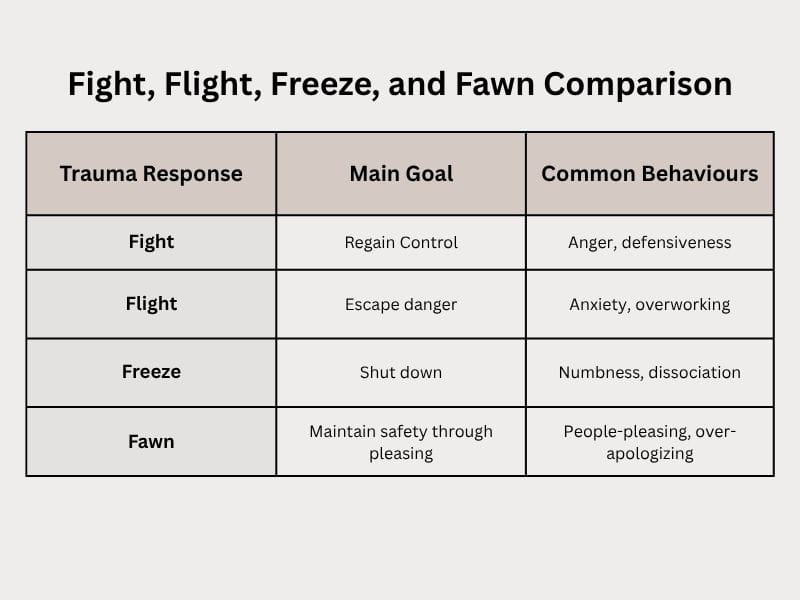
The fight response uses combative methods such as yelling, hitting, or intense anger to address threats. Individuals may focus on their need for control or protection as their brain prepares the body for physical response. This response often develops in individuals who grew up in unpredictable environments, learned that power equals safety, or vulnerability feels dangerous.
Common Signs of the Fight Trauma Response
- Tight jaw
- Feeling intense anger (in temples)
- Defensiveness
- Body warms up
- Strong urge to defend yourself physically or emotionally
The Flight Trauma Response
The flight response uses avoidance, deflecting, or escaping as a way to keep safe. You may experience a surge of energy that helps you escape or avoid the perceived threat. Individuals may develop this response if they’ve experienced fear driven coping patterns, chronic criticism, or insecurities.
Common Signs of the Flight Trauma Response
- Severe restlessness
- Hypervigilance
- Anxiety
- Perfectionism
- Constant busyness
The Freeze Trauma Response
The freeze response is a survival mechanism where escaping feels impossible, so individuals cope by dissociating, procrastinating, feeling emotionally numb, or immobilized. It often occurs when fight or flight no longer feels possible or effective. Individuals may develop this response if they’ve experienced physical abuse that feels impossible to get out of, or repetitive childhood trauma or neglect.
Common Signs of the Freeze Trauma Response
- Feeling stiff or cold
- Pale skin
- Procrastination
- Dissociation
- Difficulty making decisions
The Fawn Trauma Response
Fawning is a trauma response that seeks safety through people-pleasing, ignoring personal boundaries, or compliance. Individuals may develop this response if they’ve experienced childhood trauma, neglect, abuse, or repeated trauma. It can come from emotionally critical caregivers or conditional love.
Common Signs of the Fawn Trauma Response
- Losing identity to look like others
- People-pleasing
- Over-apologizing
- Self blame
- Difficulty saying no
Identifying Your Primary Trauma Response

Multiple/mixed trauma responses are common as they are situation based, vary from person to person, and can change over time throughout an individuals life. People may have “default” responses that change based on their individual need at the time of a triggering event.
A primary trauma response is an automatic “go-to” instinctive reaction to stress or traumatic events. Identifying primary trauma responses is an important step in navigating and managing stress.
It can be helpful to look for early body cues, as your body knows when you are triggered before your mind does. When a triggering event occurs, see what your initial physical and emotional reaction is. This initial, automatic response is your primary response.
If you continue to struggle with identifying your primary trauma response, talking to a trauma informed therapist or journaling after traumatic events can help create a blueprint to find it.
Personal Reflection
As a child, my primary trauma response to any stressful situation with my parents was the fawn response. I often felt an intense need to make my parents happy at the expense of my own wants. I constantly found myself seeking their approval, behaving well, and never saying no in an effort to make them happy.
Today, my primary trauma response with my parents has shifted to the fight response. I find myself automatically becoming combative and defensive with my words without processing my feelings. I constantly find the need to have the last say in any argument, something I was afraid to do as a child.
This shift in trauma response is based on my childhood where I never felt protected by the same people I spent so long trying to please. Their way of protecting me often involved control and strictness, but emotionally I didn’t feel fully safe, understood, or protected in the ways I needed. Because of this, I now become triggered anytime I feel a loss of control, automatically triggering the fight response.
What Causes Trauma Responses?
Any event that signals to the brain that there may be a perceived threat can cause trauma responses. It doesn’t have to be a present event, as many triggers are created based on past traumatic events.
- Childhood trauma and attachment wounds
- Chronic stress
- PTSD and complex trauma
- Witnessing trauma
- Emotional neglect during childhood
How Trauma Responses Affect Daily Life

Trauma can affect the brain and nervous system by increasing sensitivity to perceived threats. Although these responses are needed to maintain safety at the time of the threat, it can adversely affect an individual’s daily life.
- Hypervigilance – constantly feeling alert or unsafe
- Overthinking – repeatedly analyzing situations from fear or anxiety
- Chronic anxiety – ongoing feelings of nervousness, panic, or unease
- Loss of control over emotions and behaviours – reacting intensely before fully processing emotions
- Burnout – emotional exhaustion from staying in survival mode
How to Heal Trauma Responses

Managing trauma responses is crucial to gaining normalcy in life. After a triggering experience, it’s normal to feel a rush of emotions, so practicing self-compassion when things don’t go your way is imperative to healing. If you’re beginning your healing journey, my guide on healing from childhood trauma may also help.
These responses are adaptive coping mechanisms developed for protection in a stressful environment. It’s possible to reap the benefits of trauma responses, while also managing them in a healthy manner to avoid long-term implications.
- Acknowledge your experience
- Identify when your body shows cues of a trauma response
- Journal to identify your emotions and your patterns
- Regulate your nervous system with grounding techniques or breathwork
- Educate yourself on trauma responses for validation (Reading this post is doing that!)
- Process traumatic memories with professional support (I talk more about if therapy is the right fit for you)
- Movement/body awareness
- Set boundaries
When to Seek Professional Help
You may want to seek professional support if your symptoms prevent you from living your day-to-day life, if you don’t know where to begin, or if you want to talk to someone about anything that is causing you stress.
Professional help can help you understand and process your stress in ways you may not have been able to do alone.
According to the National Institute of Mental Health, many people experience emotional and physical reactions after trauma and gradually recover over time. However, when symptoms persist long-term and begin affecting daily functioning, it may be a sign of post-traumatic stress disorder (PTSD).
Please know that there is always help available and you deserve the support you need. You can visit my Resources & Crisis Support page for crisis lines and professional support options.
Signs Trauma Is Affecting Your Mental Health
- Intrusive memories
- Emotional numbness
- Hypervigilance
- Avoidance
- Difficulty functioning daily
Final Thoughts on Fight, Flight, Freeze, and Fawn

Trauma responses are survival mechanisms designed to protect you during stress or danger. While these responses can feel overwhelming, they are adaptive patterns created by the nervous system to help you survive difficult experiences.
Healing begins with self-awareness and self-compassion. Becoming aware of your patterns without shame can help you better understand your triggers, regulate your emotions, and build healthier coping strategies over time.
Your body has gotten you through multiple stressful situations so offer it grace, and go easy on yourself!
Frequently Asked Questions
What is the most common trauma response?
There is no single “most common” trauma response because each individual’s nervous system adapts differently to stress and traumatic experiences.
Many people experience a combination of fight, flight, freeze, or fawn responses depending on the situation. Trauma responses can also change over time based on stress levels, relationships, healing, and environmental factors.
Can trauma responses be changed?
Yes, trauma responses change over time depending on the situation, relationship, and environment. With healing and long-term inner work, trauma responses can become more manageable and less intense.
As individuals move through their healing journey, the nervous system gradually adapts to healthier coping patterns and emotional regulation. Techniques including therapy, grounding exercises, self-awareness, and self-care strategies can all support healing and nervous system regulation.
What trauma response is associated with anxiety?
Anxiety is most commonly linked to the flight trauma response, where individuals constantly feel on edge, feel the need to escape situations, or avoid anything that may feel triggering or overwhelming.
Individuals with a strong flight response may also experience restlessness, perfectionism, fear of failure, excessive busyness, or obsessive overthinking. Anxiety can also appear in freeze and fawn trauma responses depending on the situation and individual experiences.
Can emotional neglect cause trauma responses?
Yes, emotional neglect is commonly associated with freeze and fawn trauma responses. Emotional neglect is often connected to what wasn’t emotionally provided to a child, including comfort, emotional safety, validation, or consistent support.
Children rely on caregivers for safety and emotional connection. When emotional needs are repeatedly ignored or dismissed, the nervous system can begin viewing emotional disconnection as a threat. Over time, this can shape how individuals respond to stress, conflict, relationships, and emotional safety later in life.