For a long time, whenever I thought about my childhood, I thought of my abuse. Even good memories were eventually tainted by these thoughts. Over time, I suppressed any thought of my childhood, good and bad, with the hope that eventually I would forget my abuse altogether. This never happened. Instead, the happy memories became clouded. And my abuse? Well, I’ve realized this is something I’ll never forget.
Coming from a community where girls are often expected to be quiet, obedient, and caregivers, I was already restricted in ways that my male family members weren’t. I wasn’t allowed to go anywhere without a parent, I couldn’t go to birthday parties, when the cousins would go out, I had to stay home. I always knew that just by being a girl, I was missing out on childhood experiences that my male family members had. However, when I add my abusive experience to that, I realize I missed out on more than I could have understood at the time.
Not only did I lose memories of my childhood, but I also grieved the parts of my childhood I never received. Protection. Safety. A carefree childhood. And I only realized this once I started my healing journey and actively worked towards processing my trauma. Before I started healing, it never even occurred to me that there was anything to miss. Healing has taught me that this grief is a normal part of the healing journey, something I had to move through to become a healthier version of myself.
Disclaimer: This post contains personal reflections on childhood trauma and grief. My experiences may not reflect yours, and everyone’s healing journey is different. If anything in this post feels overwhelming, please take what feels helpful and leave the rest. You deserve support that meets you where you are.
In This POST, I REFLECT ON:
- Why I didn’t grieve my childhood until I started healing
- I didn’t want my childhood back—I grieved what I never had
- The moments that made me realize what I had lost
- Why I couldn’t feel this grief until I started healing
- How grieving my childhood changed me
- If you’re grieving the childhood you never had, you’re not alone
Why I Didn’t Grieve My Childhood Until I Started Healing
Survival was my priority throughout my abuse. At the time, I didn’t have the space to grieve my childhood because my body was subconsciously focused on surviving.
It never crossed my mind that I didn’t live a ‘normal’ childhood, nor that I missed out on typical childhood experiences. Sure, there were many moments where I wasn’t allowed to do things that ‘boys’ could do, which felt unfair at the time. But those were due to my parents’ insecurities and were their way of keeping me ‘safe.’ At the time, I didn’t know that my abuse was causing me to miss out on parts of my childhood that I should have experienced.
Once I began my healing journey, I finally felt safe enough to release the pent-up emotions I held for years. Conversations in therapy made me realize how much of my childhood I missed out on. What should have been years of simply being a child were instead spent subconsciously living in survival mode.
Healing made me realize that I grieved two things:
- I grieved the childhood I should have had, but didn’t get because of my abuse
- I grieved the fun childhood memories that were suppressed in an effort to forget about my trauma
It took me a long time to realize these were two completely different losses, but both deserved to be grieved.
I Didn’t Want My Childhood Back—I Grieved What I Never Had
Looking back at my childhood today, I feel sad for the little girl who had her childhood robbed from her. I don’t want my childhood back. I’m not sad that I can’t go back to relive my early years.
However, I was grieving experiences that I never received. As a child, I should have been protected, comforted, made to feel safe. My only worry should have been just being a child. Safety, protection, and support should have been something I automatically had without realizing I needed it.
Healing has allowed me to realize that I was the person creating safety and protection for myself. My parents couldn’t protect me from something they didn’t know was happening. The only adult who knew about the abuse was my abuser himself, and the responsibility for what he did was entirely his. As a result, my body switched into survival mode and did what it needed to do to create safety.
When I hear people talk about their childhood, they talk about how much fun they had. The trips with their families. Childhood traditions. Gifts. The small, random memories that left a big impact. All their carefree moments. What I don’t hear them talk about are the secrets they were told to keep, even from their parents. The moments where gifts were actually a way to lure them in, and running around carefree was not possible. This was my reality.
Now, being a parent myself, I see firsthand how carefree my children are. I’ve provided them with a life where they truly do not and should not have to worry about a single thing. Seeing this has made me realize how little of that same childhood experience I got. Instead, I had to carry an experience that no child should ever have to hold. I didn’t get the chance to see myself just being a child.
The Moments That Made Me Realize What I Had Lost
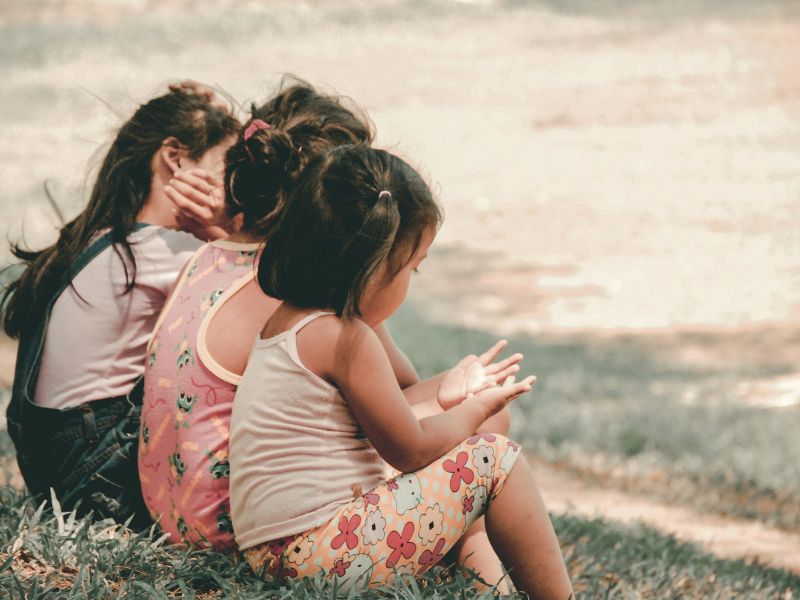
When I sit with my cousins and talk about our childhood memories, I can’t help but wonder why I don’t remember as much as they do. When they reminisce over the same memories, I struggle to give input because I truly can’t remember the specific event, even though I was there in real time.
In therapy, my therapist asked me to describe my childhood. I recounted everything I knew: who we lived with, what our house looked like, how to get to school, etc. But what I started realizing in that moment was that I couldn’t remember specific memories of my childhood. The quiet, fun moments felt foggy to me. I know it’s normal to not remember every aspect of your childhood, and everyone goes through it to some degree. However, over time I’ve realized that I remember much less of my childhood than most people seem to.
These are the moments I miss. I miss not being able to laugh about and reminisce over shared childhood experiences with my family. It’s so hard listening to other people’s recollection of my experience without having any input myself. I hate the fact that any time I think about my childhood, it’s impossible to do without thinking about my abuse.
I know there was more to my childhood than my abuse. My parents created amazing memories for our family. But in the thick of suppressing memories related to my childhood abuse, I started to suppress any childhood memory as I feared it would lead to thoughts of my abuse. I grieve the parts that were actually amazing that I don’t remember because of my childhood trauma.
Why I Couldn’t Feel This Grief Until I Started Healing
Before I began my healing journey, I wasn’t able to connect that my clouded memories were a result of my abuse. Instead, I was living moment by moment, just trying to get through each day.
To me, I viewed everything as individual pieces. The foggy memories. The abuse. The need to protect myself. Healing allowed me to bridge the gap between these experiences and understand that they’re all connected. Grief came from this realization, something I explore more in The Grief No One Warned Me About Healing.
Healing gave me a safe space to process my abuse while forming connections I never knew were possible. It allowed me to see that I didn’t have a ‘normal’ childhood. At the same time, it gave me the tools I needed to address the emotions that were attached to these realizations.
Over time, I’ve learned that the grief I experienced was a part of my healing process, and in some ways was an indicator that I was healing. It was something I had to go through, despite how difficult it felt.
How Grieving My Childhood Changed Me

Because of the grief over my childhood, I found myself feeling angry, confused, jealous, and lonely all at the same time.
- Angry that I experienced abuse
- Confused by how little I remembered
- Jealous of people who seemed to have happier childhood memories than I did
- Lonely being the only one in the room unable to remember specific memories
I spent a lot of time grieving what my childhood could have looked like if it weren’t for my experience. Over time, healing has allowed me to be compassionate over my younger self. Yes, she went through things that she should never have gone through. But it happened, she got through it, and I can now see the strength it took for her to survive. Grief has taught me more about the childhood I wish I had. Although I can do nothing to change the past, what I can do is use it to change my kids’ futures. I want more than anything to give my children the childhood that I always wanted but never had.
I know with all my heart that the abuse was never my fault. And as much as it’s impacted my past, I have control over how it affects my future.
If You’re Grieving the Childhood You Never Had, You’re Not Alone
If you’ve ever experienced grief over the childhood you never had, know that your feelings are valid.
Grief can come in many different forms, and there’s no set timeline for how long it takes. Healing isn’t about forgetting your past. It’s about being able to process your trauma, have space to feel your emotions, and to find ways to move forward despite your experiences.
Grief doesn’t mean that you’re moving backwards. In fact, I see it as an indicator that my healing journey is working. Grief over your childhood means you are able to acknowledge what ‘little you’ deserved, even though it wasn’t received.
I’m so sorry that you didn’t get the childhood experience you absolutely deserved. Being able to accept this while continuing to choose healing takes strength you may not even realize you have.