Do you sometimes find yourself reacting with intense rage to a word someone says? A tone? An action? When things don’t go the way you envisioned, is your immediate reaction anger? Think about it. Have you ever reacted strongly to something, only to wake up the next day thinking “I overreacted?”
This was me in a nutshell.
The smallest, and I mean smallest, things would set me off immediately. And many times, I would feel the complete opposite a few hours later. There was no progression to this reaction. I would go from 0 to 100 in an instant.
For so long, I believed something was wrong with me. That I was the problem. That I needed to control my emotions. While that may in part be true, something I never considered was that sometimes, my reaction wasn’t really about what was happening in the present. What someone else would consider small, activated much deeper emotions for me.
Healing taught me to dive deeper into why my body felt the need to react so strongly, so quickly. “What happened in my life for my body to automatically believe something warranted a strong reaction?” Over time, I realized these reactions stemmed from my childhood. They formed because of what I lacked in childhood. Things that “adult me” was trying to take back.
Content Note: This post is based on my personal experience and is intended for reflection and general information. Strong emotional reactions can have many different causes, and experiencing them does not automatically mean you have experienced trauma or have a mental health condition.
If You React Strongly to Things Other People Think Are Small…
- You are not “too much” because something impacts you deeply
- Try to become curious about your reactions instead of criticizing yourself
- Other people haven’t experienced what you have, and won’t always understand the emotional weight behind a situation
- Professional support is always available if your reactions become distressing or begin to impact your daily life
In This POST, I REFLECT ON:
- Life as “little me”
- When I realized how much control I had lost
- Being called “overreacting” triggered me
- Taking back control through my reactions
- My husband became my source of safety
- Learning to pause instead of react
Life as “Little Me”
As a child, I would describe myself as obedient. I always listened to elders, was easygoing, and don’t remember feeling like I had my own voice or opinions. What I did, what I wore, the way I acted in public were all influenced by my parents. I felt like my happiness came from making them proud.
Childhood was also when my abuse happened. I was young, wasn’t educated, and didn’t feel safe enough to voice any doubts I had. I truly believed I was behaving with the values I learned as a child: being obedient and listening to my elders.
When I Realized How Much Control I Had Lost
As I grew older and began viewing my childhood abuse for what it was, I began to spiral.
- I did everything I was asked to do as a child
- I listened, got good grades, and gave up my own wants to please everyone else
- I silenced my voice to follow everyone around me
And somehow, that became part of my childhood trauma.
I was never in control of my childhood. In fact, it felt like it belonged to everyone else but me. Over time, I subconsciously grew resentful toward anyone I felt was trying to control me. This became older generations, especially my parents.
The resentment that formed eventually manifested into strong immediate reactions. It felt like any time they talked:
- I became defensive
- My temples would get hot
- I had the physical urge to talk back, even when I tried to convince myself not to
- I had to do the opposite of what they asked
When I think about it, I’m able to take a breath, process my emotions, and let things go with most people my age or younger. But with anyone from an older generation, this feels almost impossible.
My strong reactions were my way of creating safety and protection. They were my way of no longer allowing other people to control me.
Being Called “Overreacting” Triggered Me
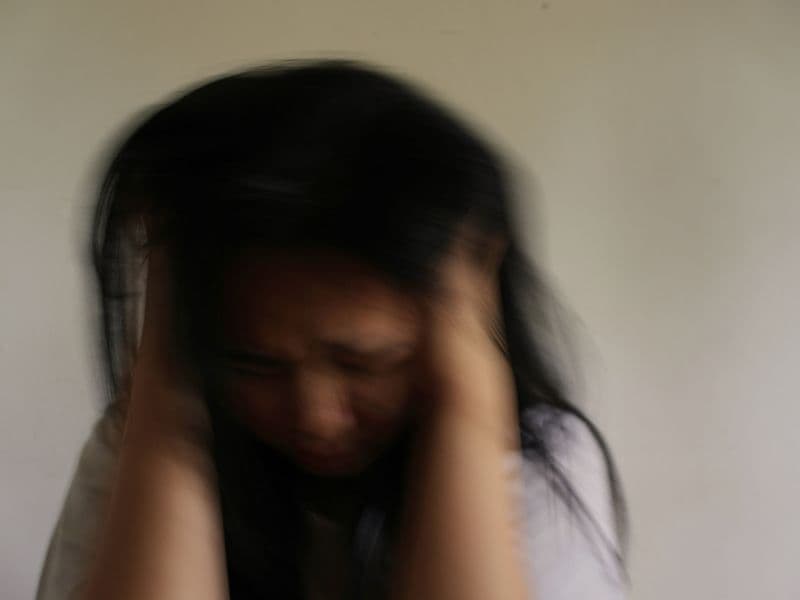
Before understanding the root of my reactions, I believed I was the problem. I thought I was too sensitive. Too dramatic. Too difficult.
Sometimes, these feelings were also validated by loved ones. I remember getting into arguments with my husband where he would casually say, “You’re overreacting.” Someone else might brush off this statement. But for me, hearing it intensified my anger.
Through therapy, I realized that words like “overreacting” and “dramatic” were emotional triggers for me. They made me feel invalidated and dismissed, something I felt throughout my life because of the abuse. I never felt protected from what was happening to me. When I spoke up, I felt dismissed. Now, when I encounter a situation that makes me feel the way I did in childhood, my immediate response is often a strong reaction.
Once I gained clarity on my reactions, I started looking at my actions with curiosity rather than judgement.
Taking Back Control Through My Reactions
Today, every single thing my parents say is met with an immediate reaction. Before my brain has time to process their intentions, I’m already becoming combative. It feels like everything they say triggers me.
- “You should water the grass”
- “It’s cold outside, change into pants”
- “Your child has food on their mouth, wipe it”
Even as I write this, my mind is triggered.
With my parents’ suggestions, as completely normal as they are, I view them as a way of trying to control me. That’s likely not their intention, but it’s how my body perceives them. My strong reactions are my way of refusing to give them control.
Now, I purposely do the opposite of what they ask.
- You think my grass is yellow and needs water? Well, I think it’s perfectly fine.
- You think I should wear pants? No. I’ll wear what I want. And it won’t be pants.
- My child has food on their mouth? I’ll wipe it after you leave.
It all sounds so petty even as I write this. But because my childhood was so unpredictable and felt like it didn’t belong to me, my strong reactions are my way of creating control for myself.
My Husband Became My Source of Safety

I also have strong reactions toward my husband, which stem from a completely different reason. During the hardest moments of my life, he became my anchor. My support person.
It probably sounds weird to most people, but I became so attached to him that I physically needed him to get better. Or at least, that’s what it felt like.
I now see it as an unhealthy attachment. At the time, I truly believed my body could only rest when I could physically see him. I could feel my body relax the second he entered a room. I still remember that feeling today.
Whenever he wasn’t around, I reacted strongly.
- “What do you mean you’re going out? We never spend time together.”
- “What am I supposed to do if you’re not here?”
It feels so uncomfortable and selfish writing this, but I literally didn’t know how to function without him. I didn’t want to be controlling, but it felt like I was. And I didn’t know how to stop. What I didn’t realize was I anchored myself to him so much that my body felt like it wouldn’t survive without him.
Learning to Pause Instead of React
Therapy has taught me that it’s possible to get my control back while also regulating my reactions.
I’ve learned to pause and breathe when feeling reactive to create space between myself and my initial response. I’m now naming my feelings out loud, which gives me a few seconds to release and process the situation, instead of reacting instantly.
I’ve learned that I have my own identity outside of my husband and my abuse. I’ve started to anchor myself to my writing. Today, I’m completely fine being on my own. In fact, “me-time” is something I look forward to daily.
Something I’ve realized is that my attachment to my husband was a result of my childhood trauma. It’s been easier to work on myself with him because he was thrown into it by being in a relationship with me. He didn’t inflict any pain; he was a bystander to something that began long before him.
It’s been much harder to control my reactions with my parents because things feel so deep rooted. I understand that they were doing the best they could at the time and that they truly love me unconditionally. But a harsh reality is that their best wasn’t good enough for what I needed from them. This is a journey I’m taking one day at a time, and I’m doing the best I can right now.
I’m Learning That My Reactions Are Trying to Tell Me Something

Today, I view myself and my reactions differently.
I’ve learned to treat myself with self-compassion and start by asking “why” when I have a strong reaction. This allows me to identify what my unmet needs are and what I need to voice clearly to myself and to my loved ones.
My reactions are learning opportunities, and they’re what will help me grow into the person I want to be. Learning to listen to myself without judgement sometimes feels impossible, but it’s what I need to become the person I want to be.